The realm of aerial combat has
entered a new era defined not by sheer speed or agility alone, but by a
trinity of revolutionary capabilities: Stealth, Sensor Fusion, and Networked Warfare.
This is the domain of the fifth-generation fighter jet—a flying
supercomputer designed to see first, strike first, and survive against
overwhelming odds. Today, only a handful of nations operate these
technological marvels. Here is a look at the top five, the apex
predators ruling the modern skies.
What Makes a Jet "Fifth-Generation"?
Before we count them down, let's define the key traits:
Very Low Observable (VLO) Stealth: Radically reduced radar, infrared, and visual signatures.
Advanced Avionics & Sensor Fusion:
Data from radar, EW systems, and off-board sources (like satellites or
other jets) is blended into a single, intuitive "God's-eye-view" for the
pilot.
Supercruise: The ability to sustain supersonic flight without fuel-guzzling afterburners.
High Agility: While often less emphasized than in 4th-gen jets, they remain exceptionally maneuverable.
Multirole Capability: Excel at both air-to-air dominance and precision air-to-ground strikes.
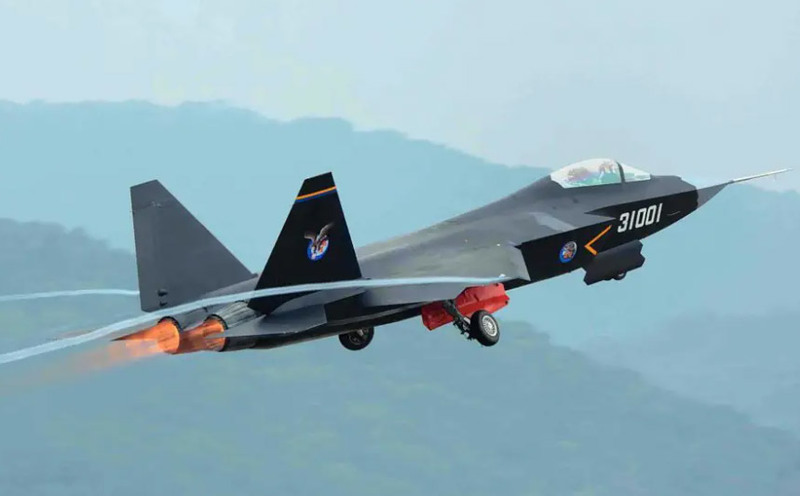
5. Shenyang FC-31 / J-35 (China)
The Emerging Dark HorseCurrently
a developmental aircraft and the basis for China's next-generation
carrier-based fighter (J-35), the FC-31 represents China's second
fifth-gen program and a potential future export competitor to the F-35.
Design:
A mid-sized, twin-engine design that bears a superficial resemblance to
the F-35, suggesting a multirole focus balancing air combat and strike
missions.
Potential:
It aims to offer a more affordable and exportable fifth-gen option
while serving as a crucial component of China's future carrier air
wings. Its development indicates China's commitment to building a full
ecosystem of stealth combat aircraft.
Unknowns:
Its sensor capabilities, true stealth characteristics, and performance
data remain largely speculative as it is not yet in operational service.
Verdict:
A wildcard with significant potential to reshape the global stealth
fighter landscape in the coming decade, both in the Pacific and on the
export market.
4. Sukhoi Su-57 "Felon" (Russia)
The Agile Supercruiser
Russia's
entry into the fifth-gen club emphasizes a different blend of
characteristics, prioritizing super-maneuverability and powerful
weaponry alongside reduced observability.
Performance & Armament:
Equipped with thrust-vectoring engines, the Su-57 is likely the most
agile aircraft on this list. It is designed to carry a huge payload,
including uniquely large internal weapons bays for very long-range or
even hypersonic missiles.
Stealth:
Considered the weakest in "pure stealth" among this group. Its design
includes some stealth features but compromises with features like
external hull joints and a less integrated engine design.
Sensors: Boasts a sophisticated suite, including N036 Byka AESA radar with L-band arrays on the wing leading edges, designed to help detect stealth aircraft.
Limitation:
Its "stealth-first" compromise, low production numbers, and questions
about its advanced sensor fusion maturity place it in this position.
Verdict:
A potent and dangerous "4.5+ generation++" fighter that brings unique
Russian strengths in kinematics and heavy weaponry to the fifth-gen
conversation.
3. Chengdu J-20 "Mighty Dragon" (China)
The Long-Range Interceptor
China's
answer to fifth-generation air power, the J-20, presents a unique and
formidable design philosophy focused on the vast Asia-Pacific theater.
Design & Role:
Its large, elongated airframe, canards, and focus on powerful AESA
radar suggest a primary role as a long-range "air superiority
interceptor." It is built to target high-value support aircraft (like
tankers and AWACS) and engage fighters from great distances.
Stealth:
Estimates suggest it has potent frontal-aspect stealth, though its
rear-quarter and engine details may be less optimized. Its canards
present a stealth challenge.
Weapons:
Features large internal bays for long-range, radar-guided PL-15
missiles, giving it a significant "first-look, first-shot" advantage.
Limitation:
Until recently, it relied on older Russian-derived engines, limiting
supercruise ability. New WS-15 engines may be changing this. Its true
sensor fusion capabilities remain less known.
Verdict:
A specialized, high-threat system designed to challenge access in key
regions, representing China's leap into advanced aviation.
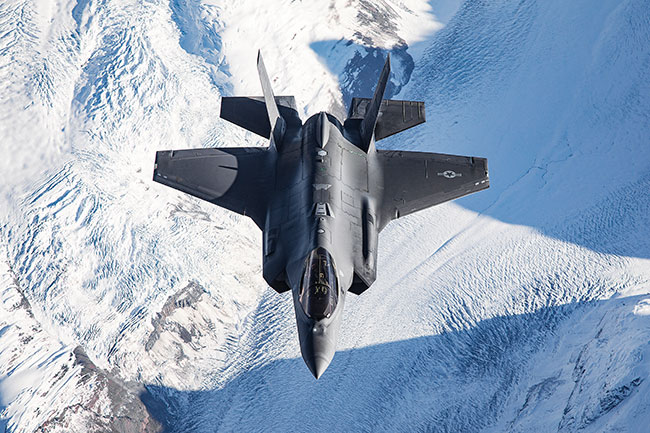
2. Lockheed Martin F-35 Lightning II (United States)
The Digital Quarterback of the Battlespace
If
the F-22 is the elite duelist, the F-35 is the ultimate team player and
information hub. Built in three variants (Conventional F-35A, STOVL
F-35B, Carrier-based F-35C), it is the most widely produced and exported
fifth-gen fighter.
Sensor Fusion: This is the F-35's crown jewel. Its AN/APG-81 AESA radar, Electro-Optical Targeting System (EOTS), and Distributed Aperture System (DAS) create an unparalleled 360-degree awareness that can track targets and share data seamlessly with allied forces.
Stealth: While optimized for a balance of stealth and payload, it remains exceptionally stealthy, particularly from frontal aspects.
Network Centric:
The F-35 is designed to be a "flying server," gathering and
disseminating targeting data for ships, other aircraft, and ground
troops without ever firing a shot itself.
Limitation: It lacks the raw speed, altitude, and agility of the F-22, making it less focused on deep penetration air superiority.
Verdict: The F-35 is the linchpin of modern networked warfare, making entire allied forces more lethal.
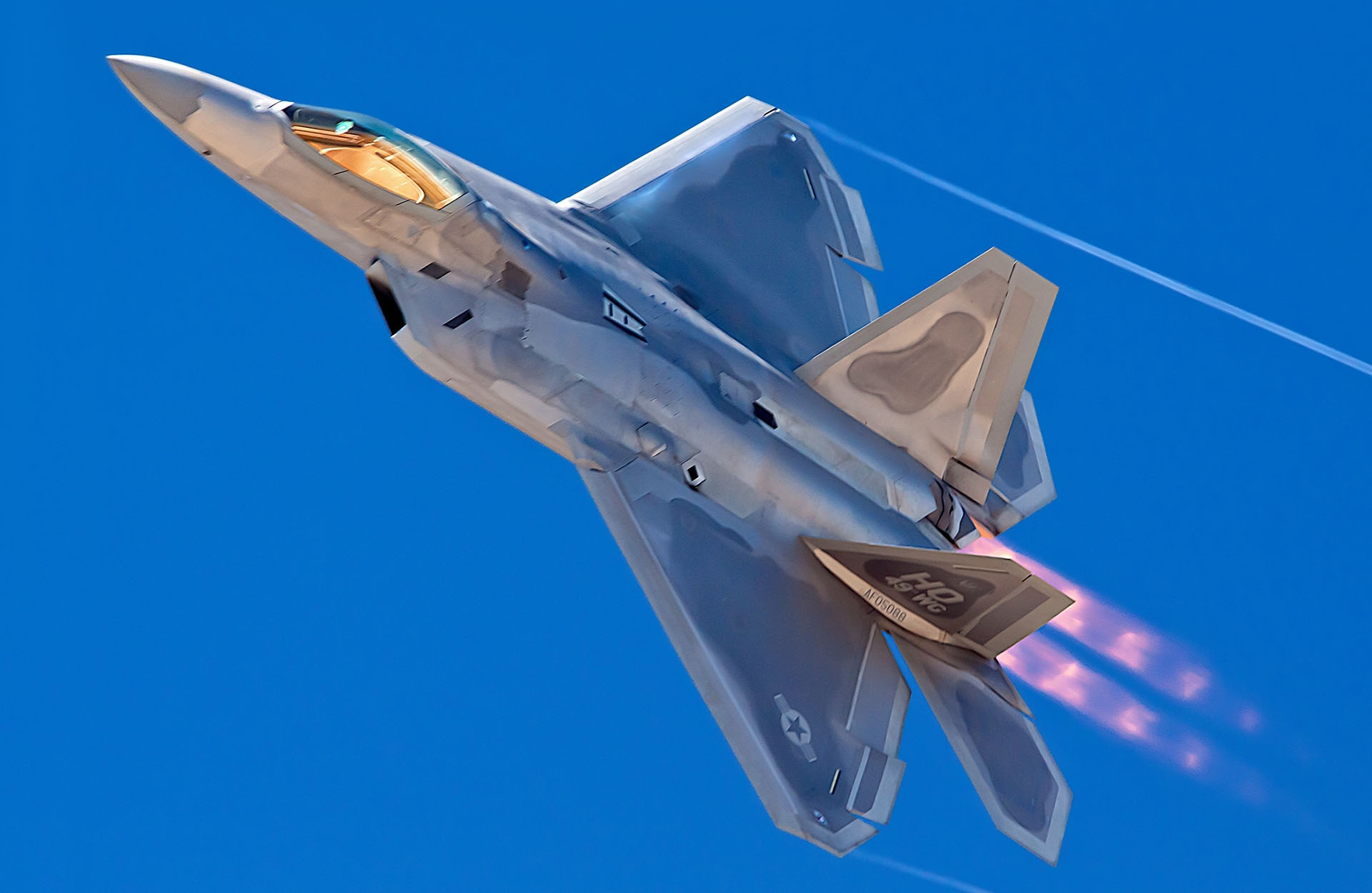
1. Lockheed Martin F-22 Raptor (United States)
The Undisputed Air Dominance King
The
F-22 was the first operational fifth-gen fighter and remains the
benchmark for pure aerial combat. Designed to achieve and crush enemy
control of the skies, its combination of attributes is still unmatched.
Stealth:
Its radar cross-section is often compared to that of a marble. Its
design, materials, and internal weapon bays make it the stealthiest
air-to-air fighter ever built.
Performance:
With supercruise over Mach 1.8 and thrust-vectoring engines, it
possesses breathtaking kinematic performance—it can outrun and
outmaneuver any potential adversary.
Sensor Suite: The AN/APG-77 AESA radar and sophisticated sensor fusion give Raptor pilots unparalleled situational awareness.
Limitation:
Its production line closed in 2011, limiting numbers and making
upgrades costly. It also has limited ground-attack focus compared to
others on this list.
Verdict: In a within-visual-range (WVR) or beyond-visual-range (BVR) dogfight, the F-22 remains the aircraft to beat.
Summary Comparison Table
| Aircraft | Country | Primary Role | Top Speed | Stealth Level |
| F-35 Lightning II | USA | Multirole | Mach 1.6 | High |
| F-22 Raptor | USA | Air Superiority | Mach 2.25 | Extreme |
| Chengdu J-20 | China | Air Superiority | Mach 2.0+ | High |
| Sukhoi Su-57 | Russia | Multirole | Mach 2.0 | Medium |
| Shenyang J-35A | China | Multirole | Mach 1.8+ | High |
The Future of the Pecking Order
The gap between the fourth and fifth generations is no longer just about the airframe—it's about the software. As we look toward the 2030s, "Sixth-Generation" programs like the U.S. NGAD (Next Generation Air Dominance) are already in development, promising even greater integration with AI and unmanned "loyal wingman" drones. For now, however, these five titans remain the gold standard of aerial power.
This list is dynamic. The upcoming American Next Generation Air Dominance (NGAD) program, Europe's Future Combat Air System (FCAS), and the UK's Tempest
promise a sixth generation of even more advanced, potentially
optionally manned systems. But for now, these five represent the cutting
edge of manned fighter technology—a combination of stealth, silicon,
and strategy that defines air power in the 21st century.


 There’s something striking about contrast: snow-covered tracks and an athlete with unmistakable Mediterranean features. Wierer’s dark hair, defined brows, and confident expression give her a distinctly European elegance. Even bundled in winter gear, her presence feels stylish and poised.
 Kim’s appeal is youthful and natural. Bright smile, relaxed confidence, and expressive eyes give her a fresh, effortless look. There’s an approachable charm to her appearance — the kind that feels authentic rather than styled.
 Hendrickx leans into bold presentation. Strong eye makeup, sleek hairstyles, and daring costume cuts highlight her athletic frame. Her look is modern and confident — less delicate, more powerful — which makes her visually distinctive on the ice.



.jpg/1200px-J-20_at_CCAS2022_(20220827103424).jpg)



 Posts
Posts



